Source CE Certified Solar Pool Ionizer for Pools, Spas, and Lakes
Compare 30 CE certified solar pool ionizer options from verified Chinese manufacturers. Buyers can evaluate voltage, solar panel wattage, and purification efficacy for residential and commercial water treatment needs; compare the available evidence and request quotations based on your requirements.
Key considerations
Products List


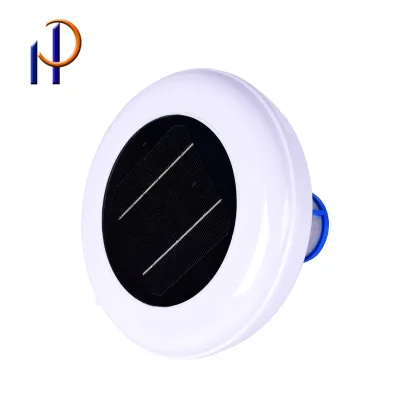
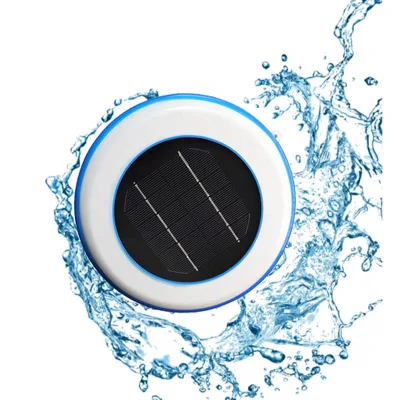
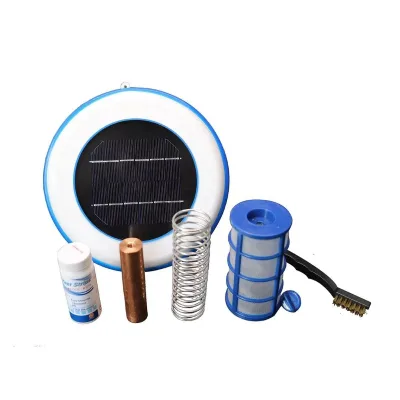
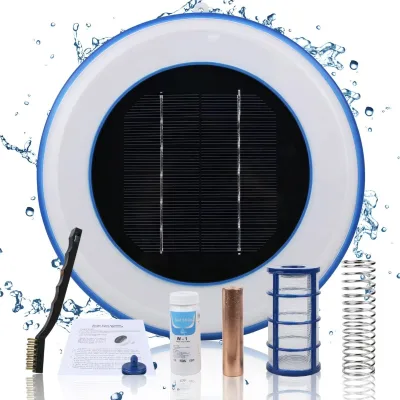
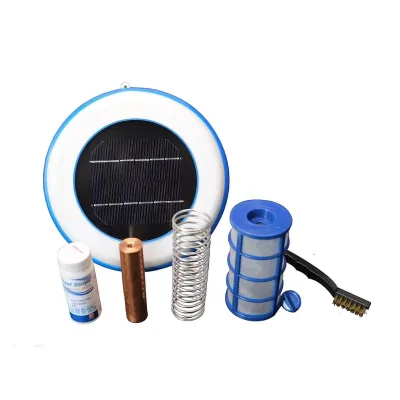

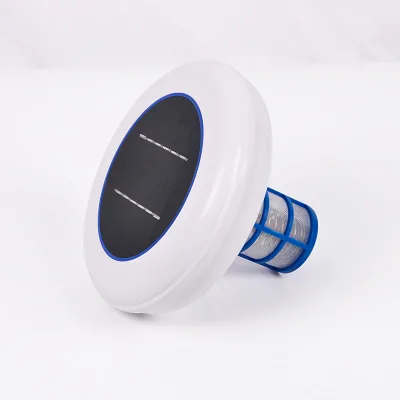
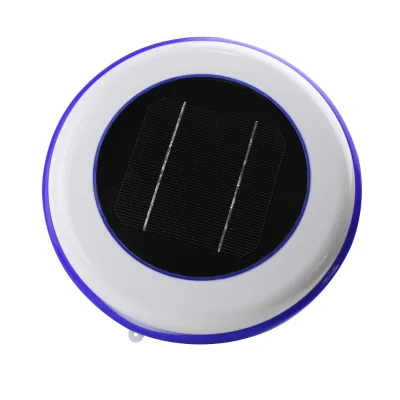


Comprehensive Sourcing Guide
CE Certified Solar Pool Ionizer Sourcing Guide
Procuring a CE certified solar pool ionizer requires distinguishing between general water purification units and specialized pool treatment devices. The available market data indicates a diverse range of products, including home ECG devices and various water purifiers, yet specific solar ionizers for pools are identified by their unique voltage and solar panel wattage requirements. Buyers must carefully filter listings to ensure the product is designed for external pool use rather than domestic drinking water or other applications, as the technical parameters for pool ionization differ significantly from standard household units.
Verification of the solar component is critical, as the supplied facts highlight specific wattage ranges and voltage outputs essential for autonomous operation. A functional solar pool ionizer typically operates within a narrow voltage window, often between 6.0 and 7.5 volts, powered by a solar panel rated between 1.5 and 2.1 watts. Sourcing guides must emphasize that not all listed "solar" products meet these specific electrical thresholds, and buyers should demand explicit confirmation of the solar panel's capacity to sustain the ionization process without auxiliary power sources.
Product Scope and Observed Listing Signals
The observed product landscape reveals a wide spectrum of items, from infant care devices to heavy-duty water purification systems, necessitating a rigorous filtering process for pool-specific equipment. While some listings mention "Solar Water Ionizer" and "Suitable for Pool," others describe wall-mounted or portable units intended for straight drinking water or general descaling. Procurement teams must scrutinize the "Usage Mode" and "Suitable for" attributes to confirm the device is explicitly engineered for pool environments, avoiding confusion with domestic water treatment systems that lack the necessary output for large-volume water sanitation.
Listing signals such as "Transportation by Sea/Plane" and specific packing configurations like "4units/Carton" provide logistical clues but do not guarantee the product's functional suitability for pool chemistry. Buyers should look for explicit mentions of pool compatibility alongside the CE certification, as the presence of a certification alone does not validate the product's application. The distinction between a "Home ECG" and a "Solar Water Ionizer" is stark, and the procurement strategy must rely on precise attribute matching to isolate the correct category of equipment for outdoor aquatic maintenance.
Technical Specifications to Verify
Electrical specifications form the backbone of a reliable solar ionizer, with voltage and current ranges serving as primary indicators of operational capability. The data suggests that valid units operate at low voltages, specifically between 6.0 and 7.5 volts, with current draws ranging from 190 to 270 milliamps. Buyers must verify that the solar panel wattage aligns with these electrical demands, typically falling between 1.5 and 2.1 watts, to ensure the system can generate sufficient ionization current for effective pool water treatment without external power intervention.
Physical dimensions and material composition are equally vital for installation and durability in harsh outdoor environments. While some listed standards reference dimensions like 23cm or 340450198mm, these measurements vary widely across different product types, including purifiers and other electronics. Procurement teams should confirm that the physical size and material, often plastic, are suitable for submersion or mounting in a pool setting, ensuring the unit can withstand the specific environmental conditions of a swimming pool without degradation or failure.
Compliance and Safety Documentation
CE certification is a mandatory baseline for market access in many regions, yet the specific scope of this certification must be validated against the product's intended use. The supplied facts list CE alongside other standards like RoHS and EMC, but buyers must ensure the certification explicitly covers the solar ionization function and pool application. Relying solely on the presence of a CE mark without verifying the specific test reports for electrical safety and environmental compliance can lead to the acquisition of non-compliant equipment that poses risks to both the pool infrastructure and user safety.
Safety documentation should also address the chemical and electrical interactions inherent in pool ionization systems. While some listings mention pH ranges like 4-11 or 2-13, these values often pertain to water purification efficacy rather than the ionizer's operational safety limits. Buyers must request detailed safety data sheets that confirm the device's ability to operate safely within the specific pH and chemical environment of a swimming pool, ensuring that the ionization process does not generate hazardous byproducts or electrical faults that could compromise the pool's integrity.
Cost Drivers and Commercial Terms
Pricing in the solar pool ionizer market is influenced by the complexity of the solar integration and the specific electrical components required for autonomous operation. The observed price range of 10 to 380 USD reflects a broad spectrum of product capabilities, from basic units to more advanced systems with enhanced solar efficiency. Buyers should understand that lower-priced items may lack the necessary solar panel wattage or voltage stability to function effectively, while higher-priced units often include more robust materials and comprehensive safety certifications that justify the premium cost.
Commercial terms such as Minimum Order Quantity (MOQ) and packaging configurations significantly impact the total cost of ownership and logistics planning. The data indicates an MOQ range of 1 to 200 units, with packing options varying from single units in color boxes to bulk cartons containing four units. Procurement strategies must balance the need for inventory flexibility with the economies of scale offered by larger orders, ensuring that the chosen supplier can accommodate the specific packaging requirements and delivery schedules necessary for efficient pool maintenance operations.
Supplier Qualification and Quality Control
Supplier qualification for solar pool ionizers requires a deep understanding of the manufacturer's expertise in both solar energy integration and water treatment technologies. The origin of products, often listed as Zhejiang Province, Guangzhou, or general Mainland China, suggests a concentration of manufacturing capabilities in these regions. Buyers should verify the supplier's track record in producing solar-powered devices, ensuring they possess the technical know-how to maintain consistent performance across varying environmental conditions and to adhere to the strict quality standards required for pool equipment.
Quality control processes must extend beyond basic manufacturing checks to include rigorous testing of the solar panel's efficiency and the ionization unit's electrical stability. Given the diverse product attributes observed, from "Customized" options to standard models, suppliers must demonstrate a robust quality assurance framework that validates the specific electrical parameters and material durability of each unit. Buyers should request evidence of batch testing and quality control records to ensure that every delivered product meets the specified voltage, current, and solar wattage requirements for reliable long-term operation.
Long-Term Procurement Checks
Sustaining the performance of solar pool ionizers over time requires regular monitoring of the solar panel's efficiency and the ionization unit's output stability. As solar panels degrade and environmental conditions change, the voltage and current output may fluctuate, potentially affecting the device's ability to maintain water quality. Procurement teams should establish a schedule for periodic performance checks, verifying that the solar panel continues to generate the required 1.5 to 2.1 watts and that the unit maintains the specified voltage range of 6.0 to 7.5 volts throughout its operational life.
Maintenance and replacement strategies are essential for managing the lifecycle of these devices, particularly given the potential for component wear in outdoor settings. Buyers should inquire about the availability of spare parts, such as replacement solar panels or ionization cells, and ensure that the supplier offers support for troubleshooting and repairs. Establishing a long-term relationship with a qualified supplier can facilitate access to technical support and replacement components, ensuring that the pool ionization system remains effective and compliant with safety standards over the years.
FAQs
Can I find a CE certified solar pool ionizer with customization options?
Yes, customization is available for this product category. The listed items include specific models like the Jaye and Sgsi01 which support custom requirements. Buyers can select from various voltage and power specifications to match their pool needs while ensuring CE compliance for safety standards.
What is the typical voltage range for these solar pool ionizers?
The voltage range varies by model, with some units operating at 220V and others at 6.0-7.5V. Specific solar panel wattage ranges from 1.5 to 2.1W for portable units. Buyers should verify the exact voltage requirement against their power supply before purchasing to ensure proper functionality.
Which certifications are standard for these solar pool ionizer products?
CE certification is a standard requirement for the listed products. Some models also carry RoHS and EMC certifications to ensure environmental and electromagnetic compatibility. These certifications confirm that the devices meet international safety and regulatory standards for use in various global markets.
How are these solar pool ionizers typically packaged for shipping?
Packaging varies by model, with options including standard cartons or color boxes. Some units are packed as 1PC per color box with 4PCS per carton, while others use 4units per carton. The packaging dimensions also differ, ranging from 23cm to larger sizes like 340*450*198mm depending on the specific product.
Can I source these ionizers from manufacturers in China?
Yes, the products originate from locations such as Zhejiang Province, Guangzhou, and Mainland China. Suppliers offer various models like the YYT-SPPI001 and BW-6000 from these regions. Buyers can source directly from these Chinese manufacturers who provide CE certified solar pool ionizers for external use.
What is the material composition of the solar pool ionizer units?
The units are constructed using materials like plastic and copper. Some specifications mention a standard of copper and plastic construction. This material choice ensures durability and resistance to pool water conditions while maintaining the necessary electrical properties for effective ionization and water purification.
Are there specific usage modes for these solar pool ionizers?
The devices are designed for external use and can be wall-mounted or portable. Some models feature specific styles like wall-mounted purifiers while others are portable units. The usage mode depends on the specific model selected, ensuring flexibility for different pool installation requirements and user preferences.